Essays & Reviews

Alex Deep on Putin, Clausewitz, and Ukraine

According to Deep, Putin is attempting to balance the trinity of passion, military means, and political aims in executing a plan that relies on friction and mass to succeed on the ground; and to use war as a way of achieving political ends.  However, the real question might not be whether Putin’s strategy is Clausewitzian, but whether he is choosing the correct means by which to accomplish the goal of increasing Russian influence along its borders.
Read More
Essays & Reviews

Civil-Military Relations: Huntington’s World, or No?

“It’s an Eliot Cohen world.” This judgment, rendered by former Under Secretary of Defense for Policy Michèle Flournoy at New America’s Future of War Conference, according to Thomas E. Ricks, has to do with the proper understanding of American civil-military relations. The traditional post-World War II understanding was articulated by the late Samuel P. Huntington in The Soldier and the State (1957). Huntington’s theory of “objective control” was challenged in 2002 by Eliot A. Cohen in his Supreme Command: Soldiers, Statesmen, and Leadership in Wartime.

Read More
Essays & Reviews

Is Putin Another Metternich?

Mitchell A. Orenstein, Professor and Chair of the Department of Political Science at Northeastern University, offers the provocative thesis that Vladimir Putin is an aspiring Metternich. At first glance, this seems a rather odd comparison, in temperament and style, certainly.  In foreign policy terms, Metternich would seem to be the consummate conservative, wedded to the idea of a stable European balance of power in which Austria could maximize its waning power; Putin, the foreign policy revolutionary, who seeks to kick over the table in order for Russia to maximize its waning power.

Read More
Essays & Reviews

The Original Grotian Moment

in February 1603, in which ships commanded by Jacob van Heemskerk of the Dutch East India Company seized the Santa Catarina, a Portuguese merchant ship, without explicit authorization to do so. To defend the seizure, the Dutch hired a 26-year old lawyer named Hugo Grotius, who claimed that it was a legitimate challenge to Portugal’s monopoly on commerce with Asia.  The incident happened off Singapore’s upper east coast, near Changi, where the Santa Catarina was anchored after sailing from Macau to Malacca. Grotius' opinion would subsequently be published in Mare Liberum (The Free Sea) and De Jure Praedae (On the Law of Prize and Booty).  Grotius’ arguments about the freedom of the seas, and just war, would be folded into his corporate works that became the foundation of the modern law of nations.

Read More
Essays & Reviews

Paul D. Miller on Niebuhr & Contemporary Realism

During the run-up to the 2008 presidential campaign, Barack Obama cited the influence of Protestant theologian Reinhold Niebuhr on his own thinking. This presumably included Niebuhr’s views on foreign policy – so-called Christian realism, which coincided with the strategic (Nicholas Spykman), diplomatic (George Kennan), academic (Hans Morgenthau) and journalistic (Walter Lippmann) views of “realism” that were circulating in intellectual and policy circles. Niebuhr rejected the notion that Christianity mandated pacifism in the face of tyranny (he supported World War II and resistance to Soviet communism, but opposed the Vietnam War). His views remain a source of inspiration and contention, specifically when it comes to the promotion of democracy.

Read More
Essays & Reviews

Is Strategy an Illusion? Karl Walling reflects on Richard Betts

From time to time in history, the very notion of “strategy” has come into question. Strategy, in this sense, means the ability to exercise some degree of “reflection and choice” in international politics and warfare; of being able to bring about a rational relationship between the exercise of power, especially military power, and policy objectives. Strategic skeptics, or in extreme cases, strategic atheists, if we may term them that, point to the recent failures of the United States in the Middle East (and before that, in Vietnam), and of the Soviet Union in the 1980s, as evidence that beyond a very limited point, policymakers’ efforts to exercise “strategy" points in the direction of imperial overstretch.

Read More
Essays & Reviews

In Defense of Classical Geopolitics

CSD Editorial Note: This essay was originally published in the Naval War College Review, Autumn 199, pp. 59-76.   The formulation of national strategy is influenced by a wide variety of factors, including the past history of the nation; the nature of the regime; the ideology, religion,

Read More
Essays & Reviews

Geography and World Politics

Becoming the world's only superpower can cause strange dreams. In the case of the United States, which achieved this status over 20 years ago, many who should know better have dreamed that economic interdependence, multilateral institutions, technological change, global democratization, the rise of non-state actors—even Barack Obama's charming personality—will have a transformational effect on world affairs, rendering irrelevant the geopolitics underlying American national security. But geopolitical competition between major world powers obviously continues, and these dreams, which are recognizably liberal dreams, remain delusive and dangerous.

Read More
American Classics

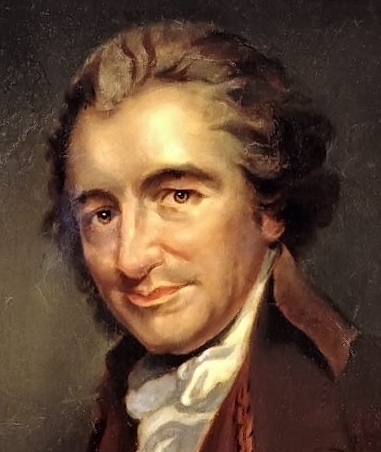
Thomas Paine’s Common Sense (1776)

Thomas Paine’s pamphlet, Common Sense, published in Philadelphia in January 1776, is properly recognized as a major turning point in the American Revolution.  Paine effectively publicized the basic argument that Patriots like John Adams and Richard Henry Lee had been making privately in the

Read More